20 September 2024, Whitworth Building, University of Manchester
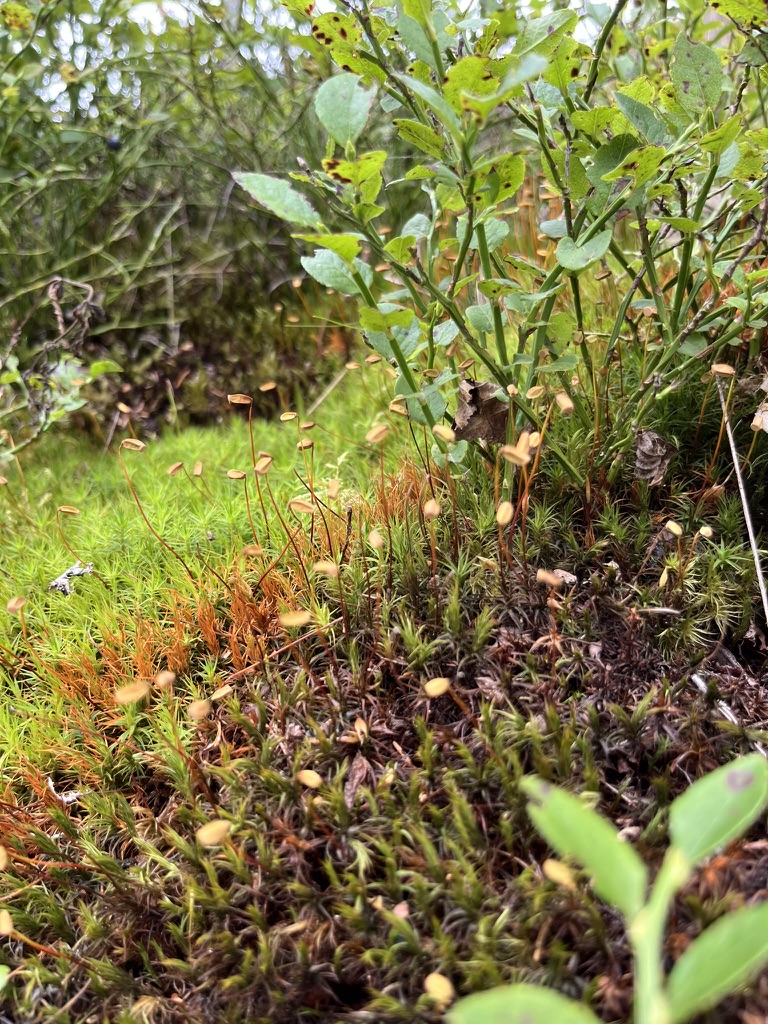
This first workshop sets out to introduce us to one another, to mosses, and to different approaches to working with mosses across disciplines and practices. As you know, in MossWorlds we are setting out to investigate the interrelated botanical, political and aesthetic stories of mosses in and around Manchester. Ongoing self-reflection is very much part of this project too, as we hope to develop a methodology based on what each of us brings to the project and on what mosses themselves teach us. The project is thus also a process. Rather than being only specialists (whether academic, artist, curator, etc), working in our own particular niches, we want to venture out and open up to new approaches and insights.
Session Convenors
Joey Pickard
Joey is an ecologist and bryologist based in South Wales. The majority of his work involves conservation ecology at a landscape scale, working on multiple peatland restoration projects in and around the Valleys, he is also completing his PhD at Swansea University. Joey’s experience with mosses ranges from specialist surveys to teaching bryophyte ecology and identification to a range of audiences from different backgrounds and abilities.
Henry McPherson
Henry is a composer, improviser, and researcher from Herefordshire (UK). His work explores creative relationships with the natural world, often focused on plant ecologies and cultural narratives. He is interested in moss music and microclimates, dialogues with trees, sonic collage, illustrated notation, and dancing with instruments. His developing approach to ‘ecological improvisation’ aims to cultivate inclusive listening and interspecies empathy in and through performance practice.
Session 1: Mosses: Natural and Social Histories
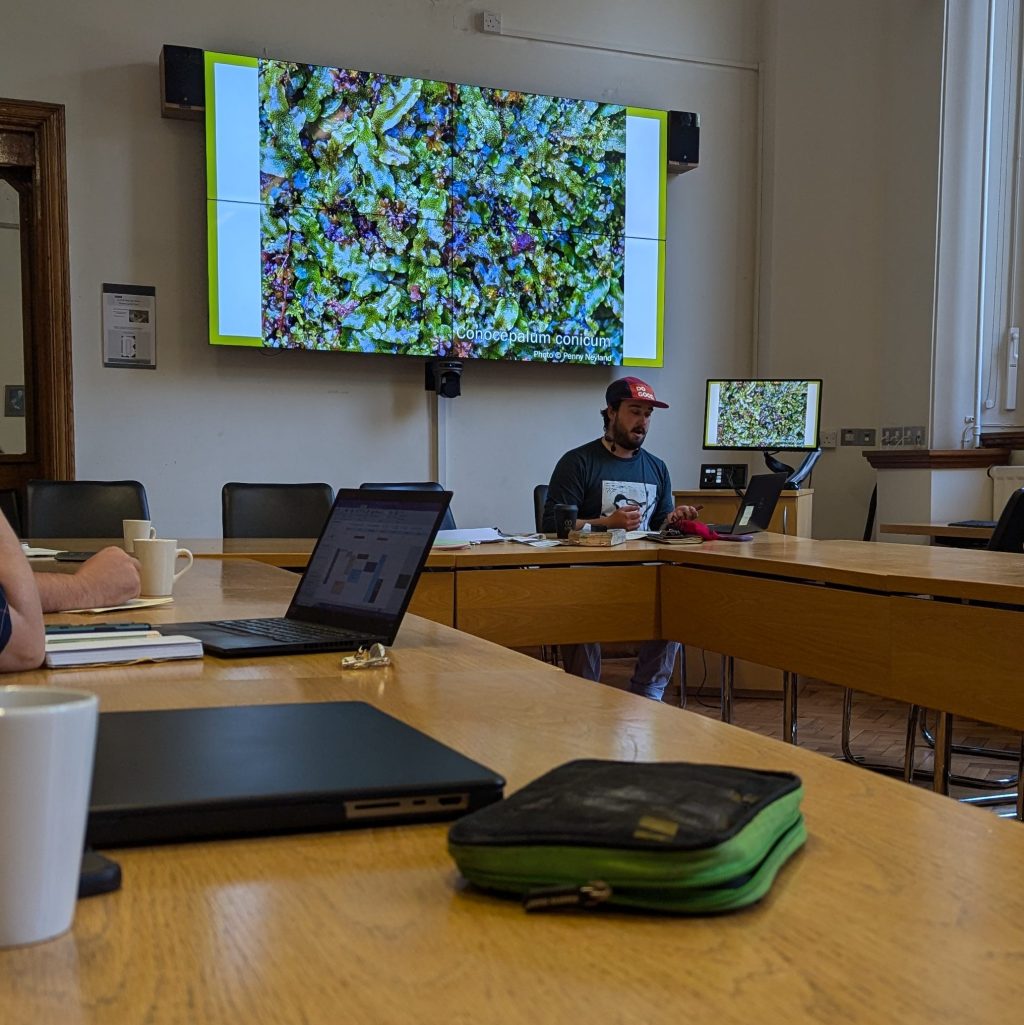
The morning session, led by Joey, traces a natural and social history of bryophytes, with a focus on the form and functions of mosses and liverworts, the evolutionary history of lower plants, how we have interacted with bryophytes through our history, and the importance of non-traditional voices in our understanding of the UK and global moss flora.
Session 2: Listening with Mosses
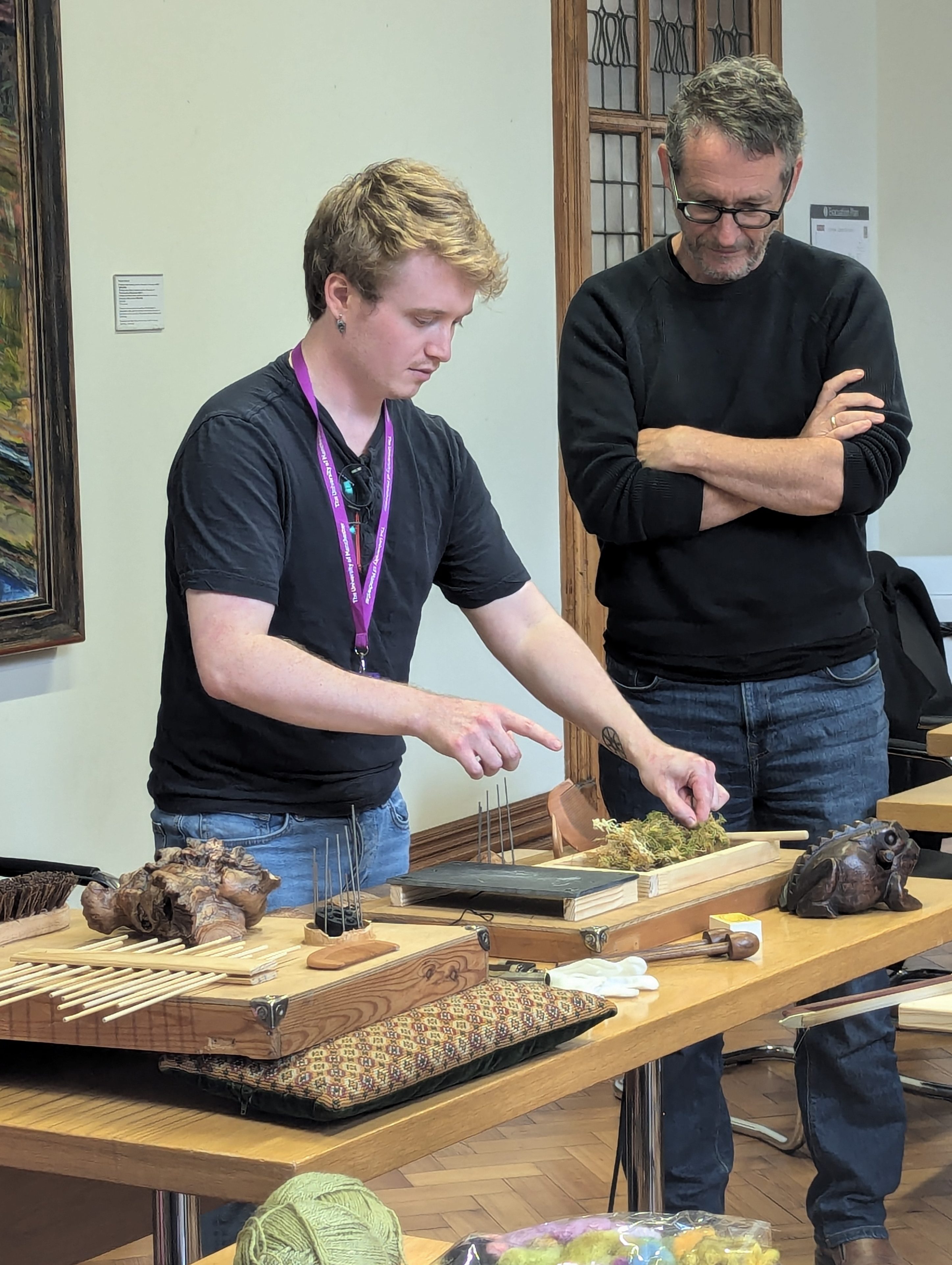
In the afternoon session, led by Henry, we will use creative sonic methods to explore the affective and poetic properties of moss worlds through tactile interfaces. We will explore some accessible, generative exercises in sounding- and listening-with mosses, using improvisational and deep listening strategies to prompt reflection on creative relationships with the more-than-human. Towards the end of the session, we will work towards creating some collective ‘text-scores’—or text prompts—to invite closer attention on moss worlds.
 MossWorlds