
Our first interdisciplinary MossWorlds workshop took place on the 20th of September, with a morning session facilitated by bryologist Joey Pickard and an afternoon with musician and improviser Henry McPherson. In this post, project leads Anke, Ingrid and Aurora share their individual and collective reflections on the event.
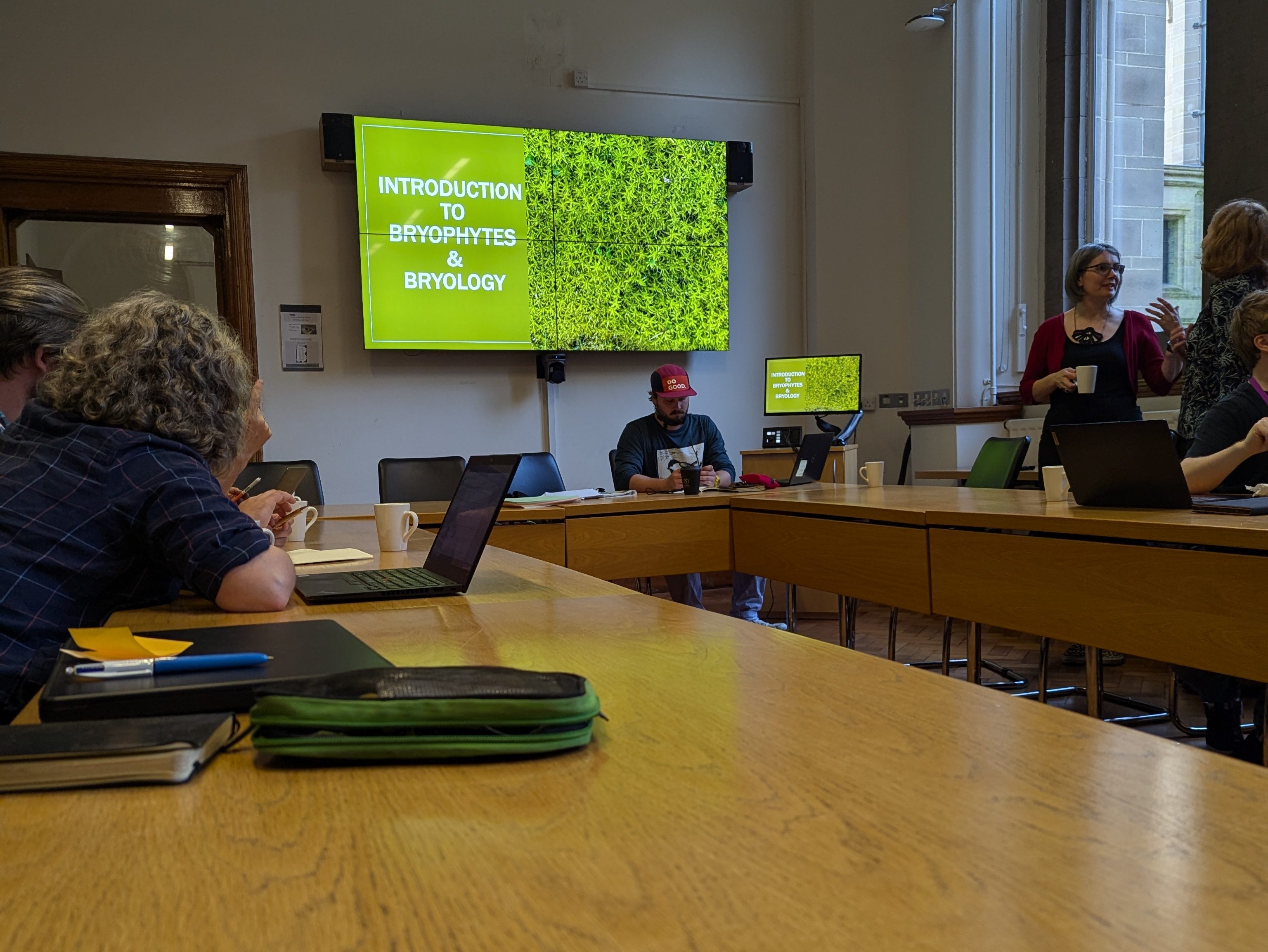

Aurora: In bringing together colleagues from across the humanities, social sciences, natural sciences and a diverse field of arts, a core ambition of the MossWorlds project is to build an interdisciplinary approach to knowing mosses that does not reduce or subordinate any one way of knowing mosses to another. In our first MossWorlds workshop we confronted the challenge of interdisciplinarity directly, pairing natural science and improvisational music as two ways of knowing moss that are not only distinct from one another – and from many of the colloquial knowledges of moss that each of us brought to the day – but in some ways non-translatable: they drew us into different moss worlds. If attention mosses (with their great variety often overlooked due to the ordinariness of their presence) lends itself to what social Anthropologist Anna Tsing’s call for an ‘art of noticing’, then our first workshop reminded us that, as social theorist Martin Savransky writes, ‘what is required of an art of noticing is not learning to see things differently, but learning to see different things’ (2021: 42). Our morning session brought us into seeing moss through the lens of bryology, understanding the biological, ecological and taxonomical characteristics that make mosses unique within the plant world and key components within the diverse landscape ecologies they inhabit, including the peatlands where sphagnum mosses play a critical role in carbon sequestration. In the afternoon session we were invited to think about moss relationally, through our own encounters and relations with mosses as well as imagining and expressing – through musical improvisation – what it is to be in relation with, and indeed, to be moss.
Ingrid: The bryology session drew our attention to the huge variety of mosses in the UK (over 1000 species), and their different forms and habitats. Joey’s story of mosses being overlooked in the world of nature TV programming reminded me of some words in the introduction to Frances E. Tripp’s British Mosses: Their Homes, Structure, Aspects and Uses (1873):
At the very idea of studying mosses a clamour of objections arises… Mosses! Mosses upon the wall! There can surely be little to say of them. Mosses! There must be so much to say of them that it is hardly possible to learn it. There is no use in a book about what we have no hope of understanding. Mosses! They can be understood we suppose, but they are so extremely difficult, and they require you to put your eyes out in looking through a microscope… thank you, we do not wish to know anything about mosses. (p. 2).
But Joey’s work, like Tripp’s back in 1873, highlighted how very much close attention to these tiny lifeforms with their single-cell leaves yields not only varieties of knowledge about small specificities and large interconnections, but also delight – a word I’ve noticed in use as well by the Victorian amateur botanist, teacher and writer, Leo Grindon, about the ways nineteenth-century working-class botanists and bryologists developed and shared their knowledge of plant life (1882: 203). A similar sense of delight permeated the afternoon session, when Henry invited us to play on and with a variety of homemade instruments. The workshop encouraged us to listen, to pay attention to each other and to sound, to the small and intricate as well as the communal and co-operative, and to what is tentative and lightly anchored as well as to persistence, recurrence and repeated rhythms. What a day of green pleasures and discoveries.
Anke: Expectations and Resonances were themes that came up for me across the two sessions and in relation to the event of an opening workshop for a new project and a new group of collaborators and co-creators. What expectations did each of us bring into the room? Of (and for) ourselves but also each other and mosses. What resonances emerged – across the group, the individual sessions and the disciplinary as well as creative perspectives that were brought into conversation?
One theme that recurred in both sessions was that mosses confound expectations in a range of ways (they are small but important; they have been called ‘primitive’ but have complex structures and interactions with others; they are ‘old’ and ‘slow’ but incredibly adaptive and resilient). Mosses confound expectations, baffle or present challenges to knowledge. This, perhaps, is why we find them on the margins, of disciplines and of civic spaces. Maybe this is also one reason why they have often attracted those on the margins: artisan botanists, non-conformists, women botanists, artists and others who are themselves surprised at falling for mosses when they didn’t expect to.

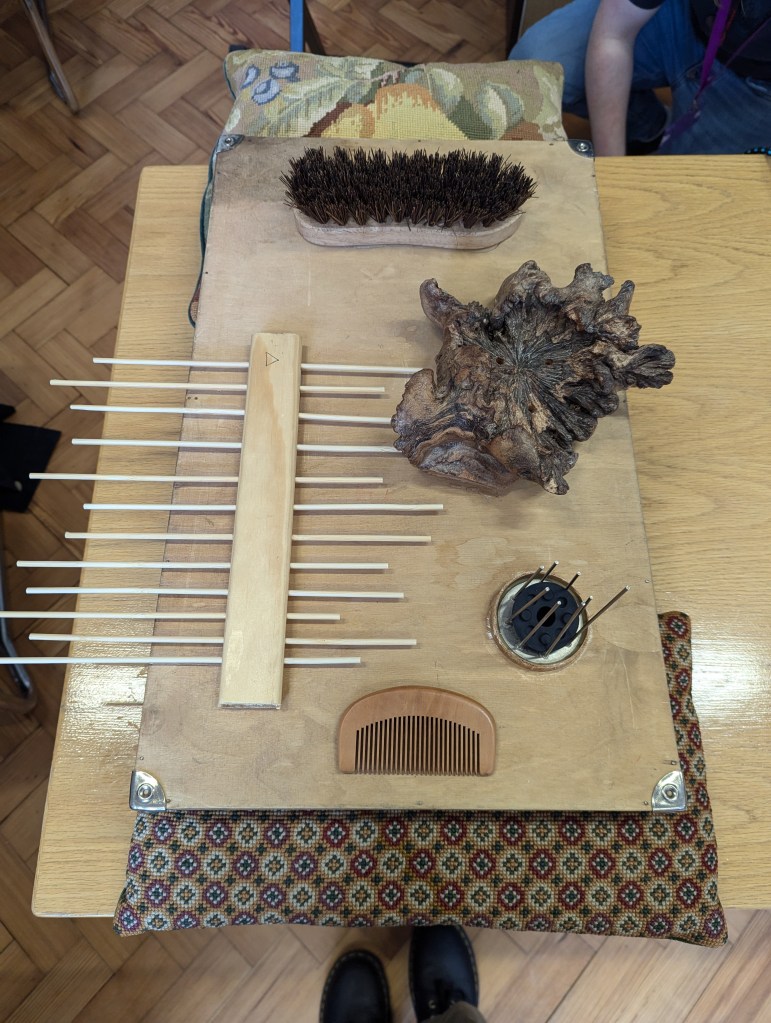
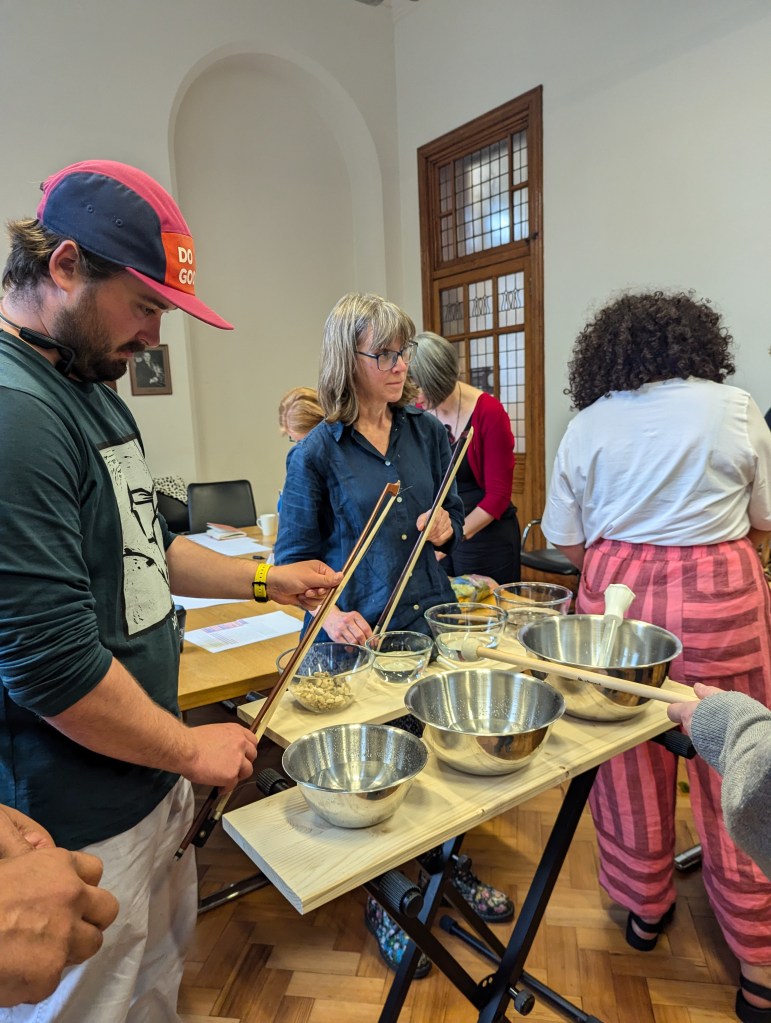
At the same time as confounding expectations, mosses facilitate relation, resonating across time and areas of expertise or practice. Perhaps because of their size, they (initially, at least) don’t overwhelm, inviting us to step closer. There seems to be something faintly humorous about studying mosses; people often smile or chuckle when I mention this is what I’m doing. Mosses seem to many pointless, useless – but this also emboldens people to speak out and to ask questions. Mosses offer a small opening onto new conversations and potential connections.
Listening and improvising with mosses was a new practice for me. It did not come ‘naturally’ and I found it challenging, both because I do not consider myself musically skilled and because I was not sure I understood how to do this ‘right’. In a gentle way, it drew attention to underlying assumptions of expertise and to the process of interdisciplinary work itself (how do we genuinely tune in to mosses and to one another?). It reminded us of the importance of playfulness and the flexibility of rules. It drew attention to the embodied aspect of knowledge creation, something that is often ignored or even denied. It reminded us of where and how we are placed; the ways in which we ‘show up’ to our work and for each other.
Anke, Ingrid and Aurora:
We are setting out in this project to explore botanical, political and aesthetic aspects of mosses, taking inspiration from the variety and vitality of mosses for our own approach to their study. We hope to develop new understandings of the pasts, presents and futures of moss and mosses as we develop new interdisciplinary methodologies and collaborations – playful, embodied and deeply serious. Robin Wall Kimmerer notes that ‘mosses and other small beings issue an invitation to dwell for a time at the limits of ordinary perception. All it requires of us is attentiveness.’ (2003:10). This first workshop has helped us begin to pay attention in new ways.
Among the oldest land plants on earth, mosses helped to create the ‘atmosphere’ that made land-based life on earth possible. They are, in this sense, ancient, durable and at the beginning of earthly life. In narrative theory, beginnings are often considered with caution: their claims to primacy, to origins, to explanatory power, can be – and often are – used in dangerous ways. Mosses are also nimble, resilient and adaptable; as Kimmerer observes, they ‘have a covenant with change’ (p. 37). The ‘story’ of mosses is mutable and ongoing. It aligns more closely with what Ursula K. Le Guin has called the ‘carrier bag theory of fiction’ – with ‘continuing process’ rather than dramatic swings between conflict and resolution. This workshop can thus be considered both a beginning of sorts and not a beginning at all. While it asked participants to step away from certainty, from already-fixed perspectives or assumptions, it acknowledged the histories and specialisms that each brought to the room. Through a shared process of paying attention to and with mosses, we hope to change the atmosphere.

Joey and Henry reflect on the first workshop
Joey: It’s not often that you find yourself in a room full of people who appreciate bryophytes and it’s even less often that such a wide range of backgrounds and disciplines come together to explore the subject. The first day for the Moss Worlds project that I was involved with was split into two halves, the first being an introduction to bryophytes session by myself and the second a free improvisation workshop run by Henry. The reaction to the introduction to bryophytes session was positive beyond anything I had hoped in the run up to the workshop, with the level of engagement from the audience and the questions raised during and after it was clear that the project has managed to pull together a truly impressive cohort of people working together to explore our relationship with mosses. The diversity of interests from the aesthetic, political and ecological backgrounds highlights the impact that this kind of project design is capable of, and it’s exciting to be a part of.
The afternoon session run by Henry was something that I was incredibly grateful to be able to stay and experience, being mostly a field based ecologist and bryologist it was an entirely new experience for me. The framework that Henry introduced for exploring mosses and our relationship with them was fascinating and getting a room full of academics to engage in an improvisational musical workshop in the way that he did took real skill. So often in science and academia, particularly the side I work in most, we focus so much on the side of knowledge that measures and defines a given thing that our relationship to them and how we experience them is forgotten. It was a real joy to begin to explore that with the group involved in the Moss Worlds project.
Henry: It isn’t often that this many people interested in learning about mosses are gathered together’ was the sentiment I took from the opening of Joey Pickard’s fantastically informative introduction to bryophyte ecology. On 20th September 2024, we had come together in one of the committee rooms in the Whitworth Hall at the University of Manchester. In the buildings around us, excited groups of new students were shepherding themselves along corridors, while outside, newly dug ‘micro-ponds’ in the renovated courtyard were filling with rainwater, and the leaves were beginning to turn.
For our audience of artists, literary scholars, geographers, curators, microbiologists, botanists, and environmental scientists, Joey managed to convey both in breadth and depth his enthusiasm and expertise in the world of mosses and wider bryophytes. We received a crash-course in moss-packet making, identifying different types of bryophytes (leafy, thalloid, and my favourite term ‘hyperoceanic’), and the ethics of collecting and sampling. For me, though, what were maybe most integral to this introduction were Joey’s stories.
Joey described trudging across peatland, bog, and forest to demarcate a bryophyte community to protect them from logging machines. He told us how his helpful canine assistant liked to chomp on moss samples, described the rich history of working-class contributions within bryophyte gathering and research communities, and spoke to the importance of mosses in cultivating a sense of place and heritage, referencing his own home and work in the valleys of South Wales. He recounted to us, with joy and pride, the process of finding, identifying, and naming an unknown species of moss, (the importance of this experience for him not necessarily reflected in the size of the species’ entry in a botanical index). And he expressed to us in various forms (anecdotes, images, graphs, data) the importance of bryophytes within contemporary climate narratives: their role in the biodiversity of micro- and macro-eco-communities; their responsibility and capacities for carbon sequestering; and their affordances as ‘ecosystem engineers’, adept at regulating water flow and acidifying peatland environments.
This grounding in the botanical, as well as the social and cultural history of bryophyte ecology felt like an important and broadly accessible place to start our interdisciplinary research into moss worlds. For my part, I was a little starstruck by the presence of a bryologist in the room, having had an artistic and philosophical interest (if not obsession) around mosses for some years, but never braving a bryology meeting. Joey’s introduction felt like an excellent way of easing us into bryophilia – not overly complex, but hugely informative. It also allayed some of my trepidation, as a participant and as the workshop-leader for the afternoon, around stepping into a botanical research area without any claim to academic biological expertise, in the disciplined, scientific sense.
 MossWorlds
Leave a comment